
How Often to Replace Uniforms: A Schedule That Holds Up
Replace employee uniforms by condition, with a calendar behind it: pull any single piece the week it fades, pills, curls at the collar or stops looking like your company, and give the whole team a planned refresh on a fixed cycle you set once and keep. That answers how often to replace uniforms better than any month count, because a receptionist and a field tech do not wear a polo out at the same rate.
Swap worn pieces as they fail, refresh the whole team on a cycle you choose, and reorder the same design from the file on record so no new setup fee applies. Budget for both tracks.
01Condition first, calendar second
Condition decides when one shirt goes. The calendar decides when everyone gets new ones. Run both and nobody on the team looks like they slept in the truck.
Most advice on this comes from uniform rental companies selling a contract. If you own your uniforms, it is simpler. Nobody can give you an honest month count for every garment, because wear depends on the job, the wash routine and the rotation. What you can set is the standard for retiring a piece and the date of the next refresh. That is how we would set up any of our corporate embroidery programs.
One real employer wrote its schedule down. Indiana University's policy on uniforms and protective equipment, for one staff group covered by an AFSCME union contract, provides five uniform replacement sets at two year intervals and one coat at four year intervals, and replaces unserviceable or unpresentable uniforms as needed. That is an example, not a rule for you. But the shape is right: a fixed cycle plus an as needed clause.
02Signs a uniform is done
A uniform is done when it no longer represents the company in front of a customer.
Polos
Over at PILLAR, our guide on when to replace your athletic wear puts the typical life of a polo at 2 to 3 seasons, and the end shows up the same way: the collar roll goes soft, the placket starts puckering and the cuffs no longer sit. Add fading and pilling. Any one of those on a customer facing employee retires the shirt.
Work shirts
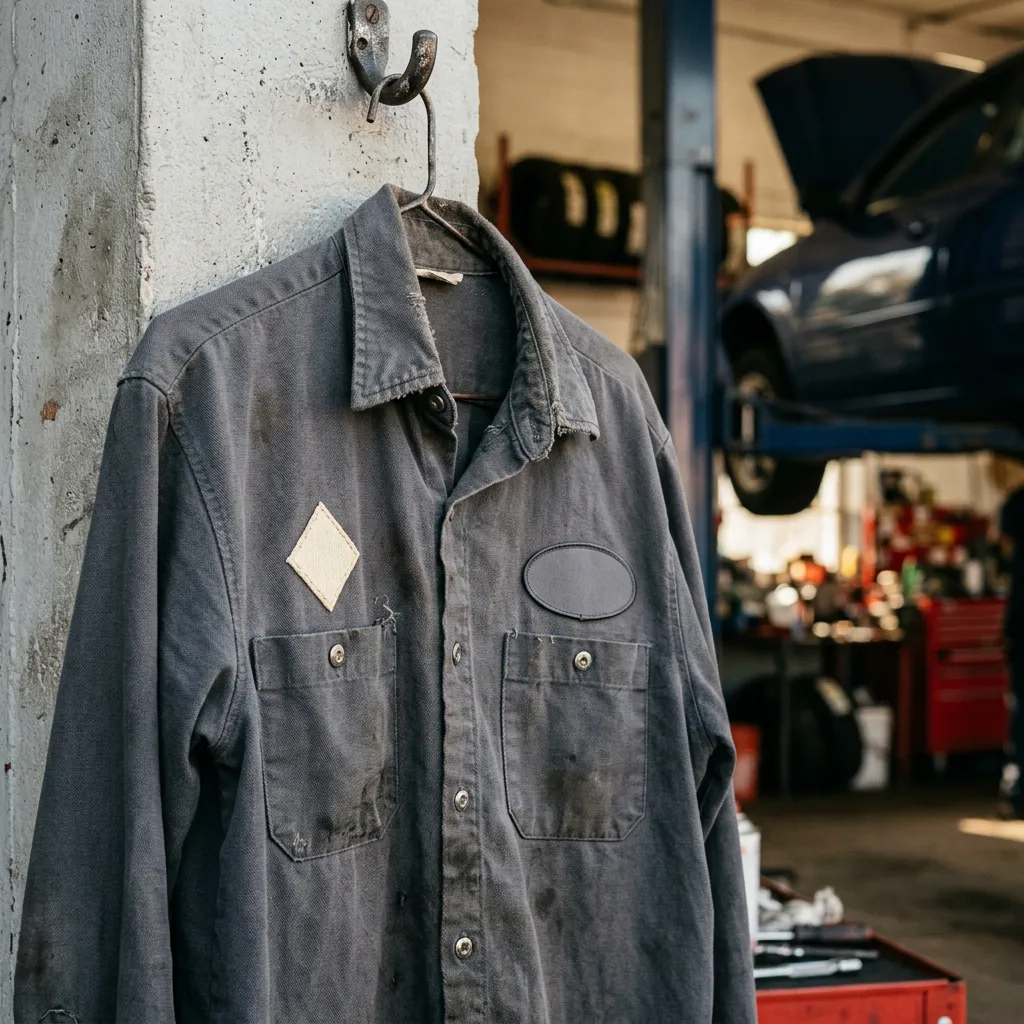
Frayed collar points, worn cuff edges and a gray cast on a light shirt are the giveaways.
Hats
A sweat line soaking through the front panel, a wavy brim or a crown that no longer stands up means the hat goes.
Jackets
Jackets are washed less and tend to outlast the shirts. Retire one when the zipper fails, the cuffs or hem fray, the shell starts to shine at the elbows or the lining tears.
The embroidery and the logo
Puckering around the logo, fraying thread and pulled fill mean the piece is near the end even if the fabric holds. If the logo itself has changed, every piece with the old mark retires at once. That is a rebrand, not a replacement.
Retire the shirt before a customer notices it.
03Replacement schedule by garment
Use this as the schedule. Where a source gives a figure, it is named. Everywhere else, check on condition.
| Garment | What wears first | Signs to replace | Who needs it first | Source |
|---|---|---|---|---|
| Polos | Collar and placket | Soft collar roll, puckered placket, cuffs that no longer sit, fading, pilling | Field and customer facing staff | PILLAR: typical life of 2 to 3 seasons |
| Work shirts | Collar points and cuffs | Fraying, gray cast, set in stains, missing buttons | Field and warehouse staff | Check on condition |
| Uniform sets | Varies by garment | Unserviceable or unpresentable | Varies by role | Indiana University example: five sets every two years, one staff group |
| Hats | Sweatband and brim | Sweat line, wavy brim, collapsed crown, fading | Outdoor crews | Check on condition |
| Jackets and coats | Zipper, cuffs, hem | Failed zipper, fraying, shiny elbows, torn lining | Outdoor crews | Indiana University example: one coat every four years |
| Embroidery | Thread and backing | Puckering, fraying, pulled fill, outdated logo | Everyone at a rebrand | Check on condition |
Field staff, drivers and anyone working outdoors will burn through pieces first. Office staff usually last until the planned refresh, so do not stock replacements as an even number per head.
04Plan the refresh and budget for it
Pick a refresh cycle once and write it down. Tie it to your budget year so it stays predictable. Before the first round, settle how many polos each person should start with, since rotation size drives wear.
Budget two lines. First, the refresh. A full team refresh of 30 polos with an unchanged logo is 30 x $7.25 = $217.50 in embroidery, decoration only, no new setup. Change the logo and it is a new design: 30 x $7.25 = $217.50, plus $35 setup, for $252.50. Second, the in between swaps. Replacing 6 worn polos with the same logo is 6 x $10.75 = $64.50, decoration only, no new setup. Our per piece embroidery rates show every quantity break, and our post on a uniform budget per employee builds the full number.
05How replacements stay matched
Replacements match when three things stay fixed: the design file, the garment style and the thread colors. Reorder files are kept on record, so a replacement or reorder of the same design does not pay the $35 setup again. Setup is one time per new logo or design.
That clock covers stock garments with your logo embroidered on our custom embroidery orders: 7 to 10 business days from proof approval. No minimums, so replacing two shirts is a normal order.
The garment is the part that can drift. Order the same style and color every time. Dye lots can vary between production runs, so a new shirt can sit slightly off an older one when they hang side by side. We went deeper on whether a company apparel reorder will match over at PILLAR. If an exact match matters for a front desk team, replace that group together rather than one shirt at a time. If polos make up most of your program, our custom polos page is the place to lock in one style for the long run.
06A replacement routine that runs itself
Put it on paper so it does not depend on who remembers.
- Check on set dates. Look at every piece against the signs above twice a year.
- Retire by the signs, not by feel. If it fails one sign, it goes.
- Log garment, color and size. Every request carries the same three details.
- Reorder from the file on record. Send the count, approve the proof, and the clock starts.
- Collect the old piece. The new shirt goes out when the worn one comes back.
07Who pays, and where the old shirts go
Plan on the company paying. In Washington, that is the written rule: the state's administrative policy on required clothing says that when required clothing is a uniform, including apparel marked with the employer's logo, the employer absorbs its cost, the cost of normal wear and tear is the employer's responsibility, and if the employer changes required colors within two years it must provide or pay for the new clothing. That is Washington's rule, rules vary by state, and this is not legal advice. Our post on whether employers have to pay for uniforms goes deeper.
Collect the retired pieces. A worn polo with your logo still speaks for the company, at a bar or on a resale rack. In our view the cleanest policy is a straight swap, one old piece back for each new one out, then recycle them or remove the logo.
08Care that buys more time
The wash routine is where most uniforms lose their life early. Wash inside out in cold water, skip bleach, keep fabric softener off performance polos, and hang dry or tumble on low. Give each person enough pieces to rotate. Hand out our guide on how to wash embroidered shirts with the first set and you will see fewer early replacements.
09Uniform replacement questions
How often should employers replace employee uniforms?
Replace single pieces on condition, as soon as they fade, pill or lose their collar shape, and run a planned team refresh on a cycle you set. No month count fits every job.
What are the signs a uniform needs replacing?
A soft or curling collar, a puckered placket, cuffs that no longer sit flat, fading, pilling, permanent stains, a sweat line or wavy brim on hats, a failed zipper on jackets, and puckered or frayed embroidery.
How long does a work polo last?
Our PILLAR guidance gives a typical polo 2 to 3 seasons, ending when the collar roll goes soft, the placket puckers and the cuffs no longer sit.
Do I pay a setup fee again when I reorder replacements?
No. Reorder files are kept on record, so a replacement of the same design does not pay the $35 setup again. A new or changed logo is a new design and pays the one time $35 setup.
Can I replace just two or three shirts?
Yes. There are no minimums. Replacing 6 polos with the same logo, for example, is 6 x $10.75 = $64.50 in embroidery, decoration only.
How long does a uniform reorder take?
Decorated reorders run 7 to 10 business days from proof approval. Every order gets a proof first.
Put your next uniform refresh on the calendar.
Send the team size, the garments and the date you are working toward, and we will quote it from the file on record.